

gPick – Technical Database Solutions
GDD’s data management solutions fall into three categories –
gPick
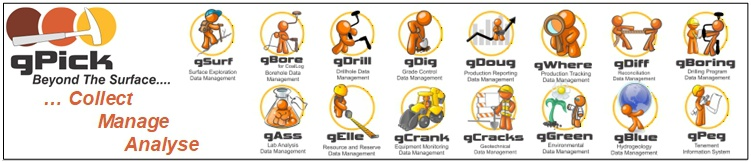
GDD have a range of technical database management applications that span the full mining lifecycle, from surface exploration through drilling, evaluation, scheduling and production through to mine closure.
geoUte
Individual utility tools that assist greatly in the identification, previewing, categorisation, assembly, integration and preservation of an audit trail related to the source data files for migration into the database. And other clever stuff…
gNeric
A range of specific data functionalities shared across the gPick and geoUte tools. These are used for customisation of the GDD applications for specific projects, and for the rapid development of new ‘bespoke’ applications.
Over the last 35 years GDD have created more than 120 data management applications for a wide variety of clients in the resources industry
Based initially on a series of large technical database systems built for Capricorn Coal and Placer Dome mining operations some years ago, GDD have developed a significant collection of applications to manage technical data across the whole spectrum of technical disciplines.
This experience has informed the development of our technical database management systems and data processing tools that also span the mining life cycle and beyond
GDD has more recently undertaken the development of a complete set of generic technical database solutions and data ‘distillation’ utilities that enable us to rapidly configure, deploy and populate new standardised database applications. These can all be readily linked to the full range of available resource analysis and evaluation systems
GDD can provide data migration, customisation, ongoing support and training for all of these systems.
Technical Database Management Solutions
gPick Database Applications
The gPick applications are a series of data management systems that span every stage of the mining life cycle, across a range of commodities.
The primary application modules cover the various major activity areas of the mining life cycle, all of which integrate where required.
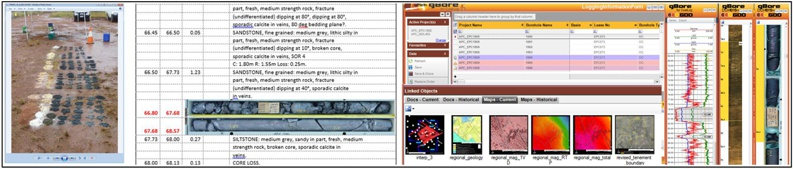
These applications provide data entry, maintenance, querying, reporting and exporting in a single unified interface for each data type, including direct access to the secondary photo and image files, and the supporting reference files
A number of stand-alone supporting modules are common to various application modules.
GDD also employ a transparent database table design standard, so it’s easy to link the relevant data to your favourite GIS, statistical or geostatistical, modelling or reporting tools. This transparency means GDD can more readily adapt the applications to your specific environment and requirements.
Every resource project is different!
Technical database applications for every stage of the mining lifecycle, and more….
- Fully scalable; from single user to corporate-wide
- Windows client-server and web access
- Fully synchronised master database, disconnected field use capable
- Proven over 30 years in mining, exploration and other technical data environments
- Significant functional application frameworks that can be customised for specific requirements
- Many user configurable capabilities
More … (gPick Data Applications)
geoUte Data Assembly Utilities
A sound technical database is without question the best place to collect, manage and analyse your valuable technical data resource.
The biggest challenge however can be getting that data, particularly from historical data collections, identified, assembled and cleaned up to load into the database in the first place!
GDD’s geoUte utilities can assist greatly with these tasks, providing individual tools to perform a variety of data identification, distillation, assembly and integration, data analysis and document assembly.
What better name than the trusty old ‘GeoUte’! Simply put, the majority of these utilities are designed to be ‘Simple Tools For The Boring Jobs’
A few of these tools have now been made ‘publicly presentable’, and are available for use in your data management activities
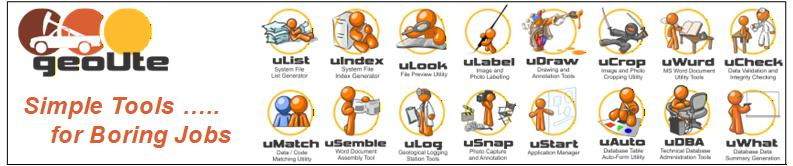
Simple tools for your data to help you with –
- Identification, classification and cataloguing
- Organization and integration for the database
- Validation and integrity checking
- Image identification, labelling, cropping, renaming and integration with the data
- Simple to complex report generation
- AI / ‘fuzzy logic’ code and description matching between different data sets
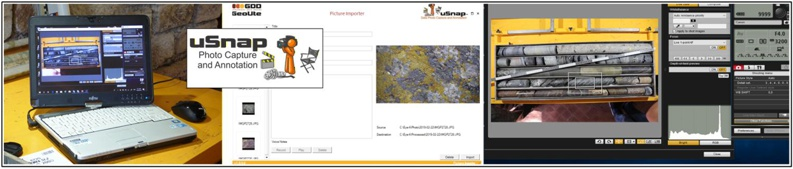
More … (geoUte Utilities)
gNeric – Generic Functional Capabilities
Over many years and many database applications, GDD have developed and evolved a significant library of generic capabilities that perform various functions in our database applications and utilities
Apart from underpinning our primary technical data management applications, these functional capabilities are available for incorporation into any of the custom database applications we are called on to create. Not only do they impart a significantly greater range of capabilities, they also greatly reduce the development time for these custom applications.
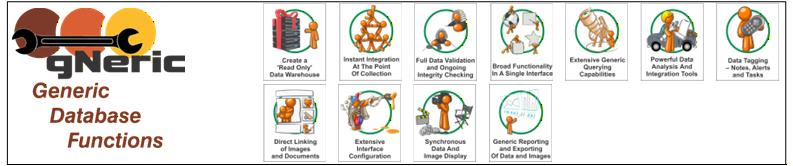
Generic database capabilities that provide significant generic capabilities in several areas –
- Full display configuration capabilities
- Individual user data environment configuration
- Generic querying, sorting, grouping, subtotalling, reporting and exporting of data in each data form
- DBA configuration tools to manage the presence (visibility) of data columns in data forms, and the validation rules and criteria for the data for instance
- Static display of ‘linked objects’ (e.g. core trays, chips, photos, documents), dynamic synchronous display of images (e.g. core slice images) against the data, and spatial display of the data on georeferenced maps and images
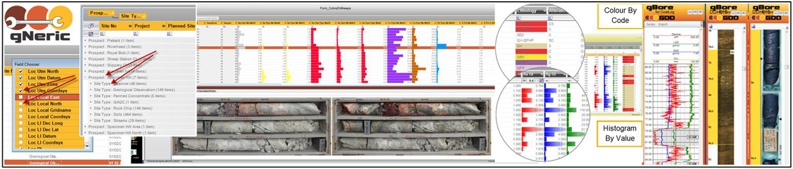
More … (gNeric Application Functionalities)
Preserving Original Data Values

Andy’s ‘Andy Tips – No. 27
One of the primary goals in recording and assembling data is (or should be) to preserve where possible the original observation, log or measurement data, so it can be reconciled back to related original documents, thereby providing a clear audit trail

Two common examples are the recording of drillhole logging depths, and original analysis or assay results.
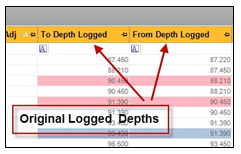
In coal logging, depth corrections are applied based on the geophysical log; preserving the original ‘as logged’ depth is important for audit reasons
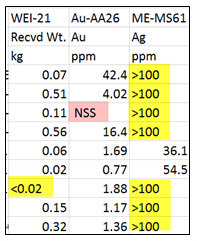
Similarly, recording the original reported values for assays is important for verification and other reasons…